How Do Construction Loans Work in Australia? (2026 Guide)
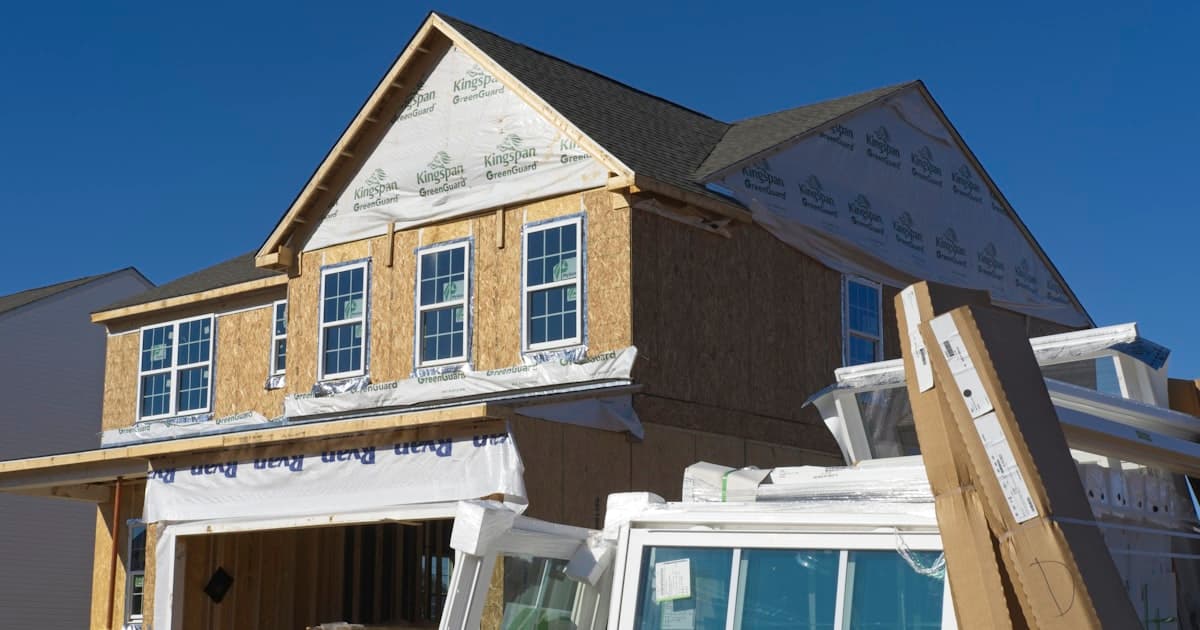
Here's the good news about financing a new build: you don't pay interest on money the builder hasn't earned yet. A construction loan is drawn down in stages, and "we only charge interest on the amount drawn down," as CommBank puts it (CommBank, 2026).
The less good news: a construction loan comes with more rules than any other home loan. Your bank pays your builder directly, sends a valuer before releasing a cent, expects your own savings to be spent first, and puts a deadline on the entire build.
Most guides to construction loans are written by comparison sites that have never watched a progress claim stall a build. This one explains the mechanics from the building side — what actually happens between "loan approved" and "keys in hand," and where the process bites.
TL;DR: A construction loan pays your builder in stages — typically slab, frame, lock-up, fit-out and completion — and charges interest only on the amount drawn so far (CommBank, 2026). Repayments are interest-only during the build, then convert to principal and interest. Lenders require a fixed-price contract and certify every stage with a valuer before paying.
What Is a Construction Loan?
A construction loan is a home loan released progressively as your house is built, rather than in one lump sum at settlement. During construction you make interest-only repayments on the drawn balance, and once the home is complete the loan converts to standard principal-and-interest repayments — a structure confirmed across CommBank, Westpac, and NAB's current products (Westpac, 2026).
Demand for them is rising. Owner-occupiers took out 55,290 loans for new housing in 2025–26, up 5.3% year on year, with WA lending growing 12% (HIA analysis of ABS data, August 2026). The average owner-occupier loan nationally now sits at $731,000 (ABS Lending Indicators, August 2026).
Three parties sit inside every construction loan, and understanding their triangle explains almost everything else:
You — sign the contracts, contribute your deposit and savings first, and approve each progress claim
Your builder — invoices the bank at each completed stage, and gets paid directly by the bank
The bank's valuer — inspects the site and certifies each stage before any money moves
Notice who's missing from the payment flow: you. The money mostly travels from bank to builder without passing through your account. That protects everyone — but it also means the bank's process, not yours, sets the pace.
How Do Progress Payments Work?
Your builder is paid at five standard stages, and the bank releases nothing — including the first and final payments — until its valuer certifies the stage is complete (Westpac construction loan guide, 2026). CommBank's typical bands: slab 15–20%, frame 20%, lock-up 20%, fit-out 30%, completion 10% (CommBank).
What banks typically release isn't the same as what your state allows a builder to claim. Victoria caps each stage by law:
Stage | CommBank typical band | Westpac example schedule | VIC legal maximum |
|---|---|---|---|
Deposit | — | Included in base stage | 5% |
Slab / base | 15–20% | 20% | 10% |
Frame | 20% | 20% | 15% |
Lock-up | 20% |
Sources: CommBank; Westpac guide; Consumer Affairs Victoria — Domestic Building Contracts Act caps for contracts over $20,000.
Westpac's own guidelines add another guardrail: outside the NT, no single mid-build stage payment should exceed 35% of the contract, and the base stage tops out at 20% including the deposit. If a builder's payment schedule front-loads more than that, both your bank and your state's law are likely to push back — a genuinely useful pre-signing check. Caps differ outside Victoria: NSW Fair Trading, Queensland's QBCC, and Building and Energy WA each publish their own deposit and payment rules, so check your state regulator's current limits before signing.
Our finding: The valuer is the quiet bottleneck of every construction loan. Banks allow around three extra working days per progress claim for the inspection, and there are five claims — so the valuation process alone adds two to three weeks across a build. Builders don't wait silently: a stalled claim usually becomes a phone call to you. Respond to your bank's requests the day they arrive and you'll remove the most common owner-caused delay.
For what each construction stage actually involves — and what to check before approving the claim — see our guide to the stages of building a house.
How Much Interest Do You Pay During the Build?
Far less than on a normal loan of the same size, because interest accrues only on the drawn balance. On an illustrative $500,000 construction loan at 6.0% p.a., your monthly interest starts around $438 after the slab payment and only reaches $2,500 once the final payment is made. The example assumes draws of 17.5% at slab, 20% at frame, 20% at lock-up, 30% at fit-out, and the 12.5% balance at completion:

Worked example at an illustrative rate — construction loan rates are variable and change; check current lender pricing. Stage bands per CommBank, 2026.
Over a 12-month build, the difference between progressive drawdown and a fully drawn loan is thousands of dollars in interest — money that offsets a good chunk of the extra fees construction loans carry. Speaking of which: most lenders charge a progressive drawing fee on each payment request, added to the loan at completion (CommBank) — the amounts aren't published on product pages, so ask for the fee schedule.
Two budgeting notes for the build window. First, you're usually paying rent and construction interest at the same time — with builds averaging 9.21 months of construction (see our timeline guide), that double-up belongs in your budget. Second, rates are variable during construction, and the cash rate sat at 4.35% as at August 2026 (RBA, via ABC News) — build headroom into your numbers rather than borrowing to the ceiling.

What Do Lenders Require Before Approval?
More than a standard home loan — because the security doesn't exist yet. Before the first drawdown, Westpac's guide requires council-approved plans and specifications, a signed fixed-price building contract with the payment schedule attached, a bank-ordered valuation of the proposed home, and the builder's insurance certificates (Westpac guide, 2026).
The full pre-approval checklist:
Fixed-price building contract — signed and dated, with building stages and the schedule of payments; cost-plus contracts are far harder to finance
Council-approved plans and specifications — the bank values what's approved, not what's imagined
Builder's insurances — public liability and builder's risk certificates, sighted before the first payment is released
Tender variations and quotes — anything that changes the contract price
Your contribution, ready to spend — see below
Our finding: The rule that surprises the most first-time builders: "Borrowers must contribute any money they have agreed to contribute towards the construction BEFORE Westpac makes any progress payments to the builder" (Westpac guide). Your savings fund the deposit and early stages; the bank's money arrives after yours is gone. Budget your cash flow around paying first, not last.
There's also a clock on the whole project. CommBank requires construction to start within 12 months and finish within 24 months of the first progress payment; Westpac allows 24 months from the loan offer (CommBank; Westpac guide). Comfortable for a standard build — tighter if your land isn't titled yet, which is worth reading up on in our house and land packages guide.
Can You Use the 5% Deposit Scheme With a Construction Loan?
Yes — building new is fully supported under the Australian Government 5% Deposit Scheme, with the guarantee covering up to 15% of the property value so you can borrow 95% without lenders mortgage insurance, and loan terms allow "up to 3 years to build a new home" with interest-only payments during construction (Housing Australia, October 2025).
But the scheme runs on deadlines that ordinary construction loans don't have:

Source: Housing Australia Information Guide, October 2025
Three scheme rules catch new-build buyers out (Housing Australia, 2025):
Land must be titled before the guarantee can be issued, inside the 90-day pre-approval window — untitled estate lots need careful timing
Everything must be in the fixed-price contract. Out-of-contract extras — driveways, fencing, landscaping — aren't covered, and our inclusions analysis found driveways excluded from 12 of 15 current base packages. Get them written into the contract, not promised on the side.
Owner-builders are ineligible — the contract must be arm's length with a licensed, insured builder
Building as a first home buyer? The scheme stacks with your state's grant — see our First Home Owner Grant guide for current amounts, and note the grant is typically paid at slab stage for construction contracts, so it lands mid-build, not at signing.
What Happens If Costs Change Mid-Build?
The part nobody budgets for: a variation isn't just a conversation with your builder — it can reopen your loan. "Cost increases usually require credit approval... we may need to get a revised valuation of the property, which can result in extra fees or a loan limit reduction," and progress claims that differ from the approved schedule can be delayed while the bank reassesses (Westpac, 2026).
The practical defences all happen before you sign:
Fix your site costs after the soil test rather than accepting a provisional allowance — site costs are the most common blowout source
Lock selections early so variations don't arise mid-build
Hold a contingency outside the loan — 5–10% in savings the bank never sees, for the hidden costs that surface anyway
Keep the payment schedule untouched — ad-hoc builder requests for early or reordered payments are exactly what your state's stage caps exist to prevent
Would your budget survive a $20,000 variation and a three-week claim delay in the same month? If the answer's no, borrow less or save longer before signing. A construction loan rewards the prepared and punishes the optimistic.

Frequently Asked Questions
How much deposit do I need for a construction loan?
As with standard home loans, most lenders look for a 10–20% deposit on the total land-plus-build cost, with lenders mortgage insurance applying at higher loan-to-value ratios. Eligible first home buyers can build with just 5% under the Australian Government 5% Deposit Scheme, which guarantees up to 15% of the property value and allows up to 3 years to complete a new home (Housing Australia, 2025).
Do I pay interest on the full loan during construction?
No — interest accrues only on what's been drawn down, and repayments are interest-only during the build (CommBank, 2026). On an illustrative $500,000 loan at 6%, that's roughly $438 a month after slab stage versus $2,500 once fully drawn.
Who pays the builder — me or the bank?
The bank pays the builder directly at each certified stage. You approve the progress claim, the bank's valuer inspects, and funds are released to the builder — your agreed contribution must be fully spent before the bank releases anything (Westpac guide, 2026).
What if my builder asks for a bigger deposit or early payments?
Check your state's caps before agreeing. In Victoria, the deposit is capped at 5% for contracts over $20,000, and each stage has a legal maximum — base 10%, frame 15%, lock-up 35%, fixing 25% (Consumer Affairs Victoria). Banks generally won't fund schedules that exceed roughly 35% at any single stage.
How long do I get to finish the build?
Most lenders require completion within 24 months — CommBank counts from the first progress payment (with a start deadline of 12 months), Westpac from the loan offer (CommBank; Westpac guide). With average construction at 9.21 months, that's comfortable for a standard build with titled land.
Conclusion
A construction loan isn't a harder home loan — it's a different machine, built around one idea: money follows verified work. Learn its rhythm and it protects you; fight it and it slows your build.
Key takeaways:
Interest accrues only on the drawn balance — roughly $438/month after slab on an illustrative $500k loan, not $2,500
The bank pays your builder directly, and nothing moves until the valuer certifies each stage — allow ~3 working days per claim
Your own contribution is spent first, before the bank releases a cent
Fixed-price contract, approved plans, and builder's insurances are non-negotiable entry tickets
The 5% Deposit Scheme works for new builds but runs on deadlines: contract in 6 months, start in 12, finish in 36
Before you talk to a lender, know your number: our free Build Cost Estimator gives you a state-based build cost in under a minute, and our cost to build guide breaks down where every dollar goes.