News
128,600 homes needed, but Geelong's new growth suburbs are stuck in planning

Greater Geelong is expected to need another 128,600 homes by 2051. Yet the plans that would turn farmland in the city's north and west into new suburbs are years behind, and the first one is caught in a row over who pays for roads, parks and community facilities. If you're hoping to buy land or build a new home in Geelong, here's what the hold-up means.
A 110,000-resident growth area still waiting for its first plan
The Northern and Western Geelong Growth Areas, around Lovely Banks, Batesford, Moorabool and the land between the Ring Road and the Midland Highway, are meant to eventually house about 110,000 people. Before a single house lot can be sold there, each precinct needs a precinct structure plan (PSP). A PSP maps out where homes, roads, schools, shops and open space will go, and how the infrastructure will be paid for.
The City of Greater Geelong was due to start submitting those plans for approval from 2023. In June this year, the Victorian Government said none had been lodged and took over four of them: Batesford North, McCanns Lane/Merrawarp Road, Batesford South and Heales Road East. Together they cover more than 23,000 homes for about 66,000 people. The Department of Transport and Planning says the two Batesford North and McCanns Lane plans should be done within about two years, with the other two due by 2031.
Three more PSPs stay with council. Across all seven, the state says the corridor can deliver more than 40,000 homes.
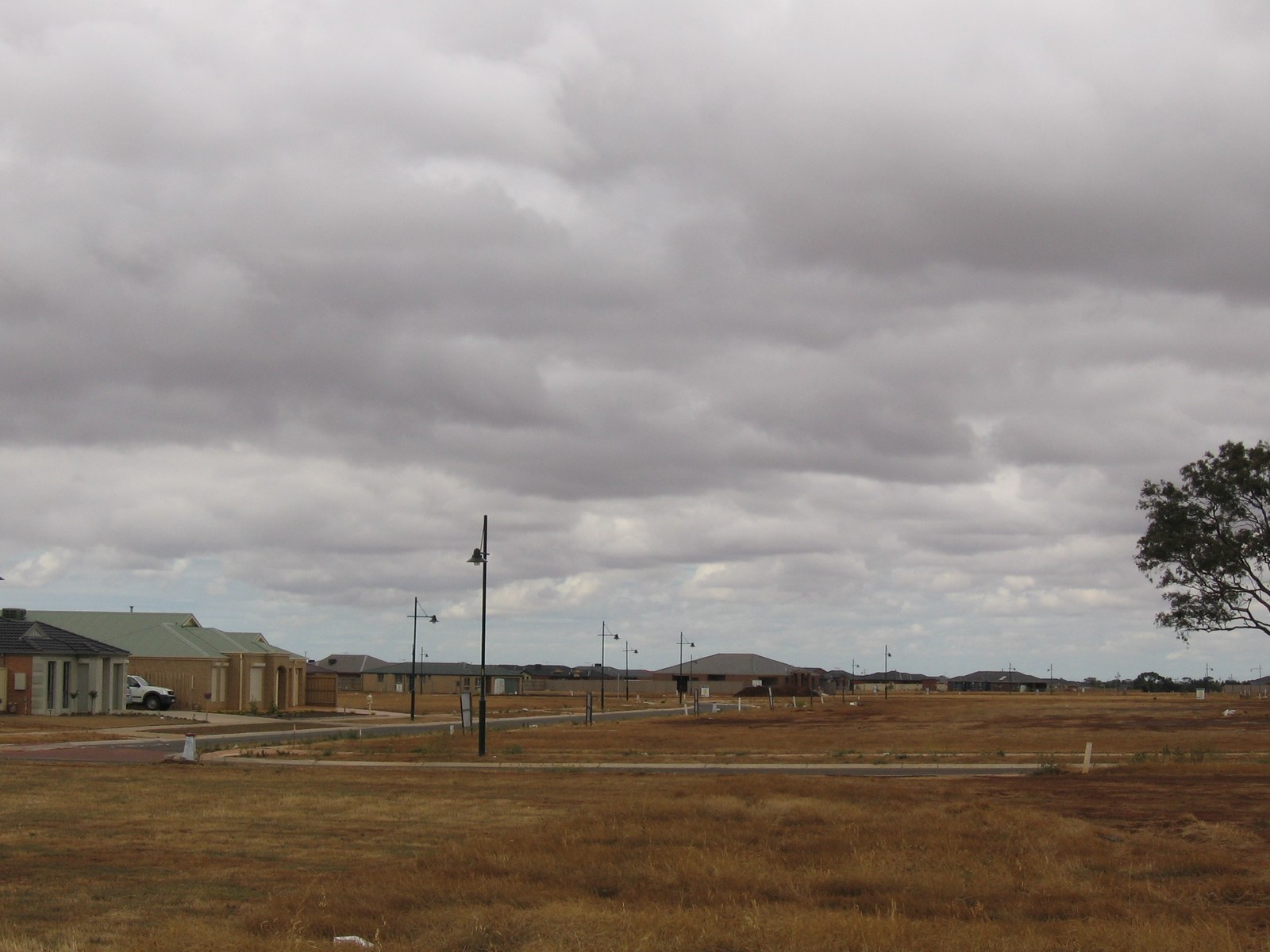
A new housing estate on Melbourne's western fringe at Melton. Geelong's next growth suburbs are still waiting on their plans. Photo: Mattinbgn / Wikimedia Commons, public domain, resized
Creamery Road: the first plan, and the cost fight
The first plan to reach the Planning Minister is Creamery Road, in Geelong's west. It covers about 345 hectares between the Geelong-Ballan Road and the Ring Road, just north of the Midland Highway, and would hold roughly 4,200 to 4,500 homes for close to 12,000 people.
The sticking point is the development contributions charge, the levy developers pay per hectare to fund local infrastructure. Council's figure started at almost $1.6 million per developable hectare. It was cut to about $823,000, but lead developer Villawood Properties says even that makes the project unviable without pushing lot prices to unaffordable levels. Villawood had proposed about $760,000.
Councillors adopted the plan in August on the mayor's casting vote, and it went to Planning Minister Sonya Kilkenny. At the end of October she sent it back to council for more work instead of approving or rejecting it. Council chief executive Ali Wastie said the decision would "delay housing delivery and increase costs to build new houses in Geelong even further". The Urban Development Institute of Australia's Victorian branch has called the costs "unworkable" once state taxes and levies are added.