News
262,000 homes short: Master Builders says Australia will miss its 1.2 million target

Master Builders Australia has told a Senate hearing that the country is on track to fall 262,000 homes short of the National Housing Accord target. For anyone building a house, the warning is less about a distant headline figure and more about costs, trades and how long the job takes.
Melissa Byrne, Master Builders' national director of policy and legal, appeared before the Economics References Committee's social housing inquiry on 10 November. "Our latest forecasts show the nation is on track to miss the National Housing Accord target of 1.2 million homes by 262,000 dwellings," she said.
That forecast, first published on 1 October in Master Builders' September-quarter outlook, projects 937,939 new home starts in the five years to June 2029. The 262,000 figure is that gap, rounded (1.2 million minus 937,939 is 262,061). It is a forecast of starts, not a count of finished homes. The Accord itself runs from July 2024 to June 2029. Reporting of the Australian Bureau of Statistics' June-quarter figures put completions in the first two years at 355,817 dwellings, about 124,000 short of a straight-line pace toward 1.2 million.
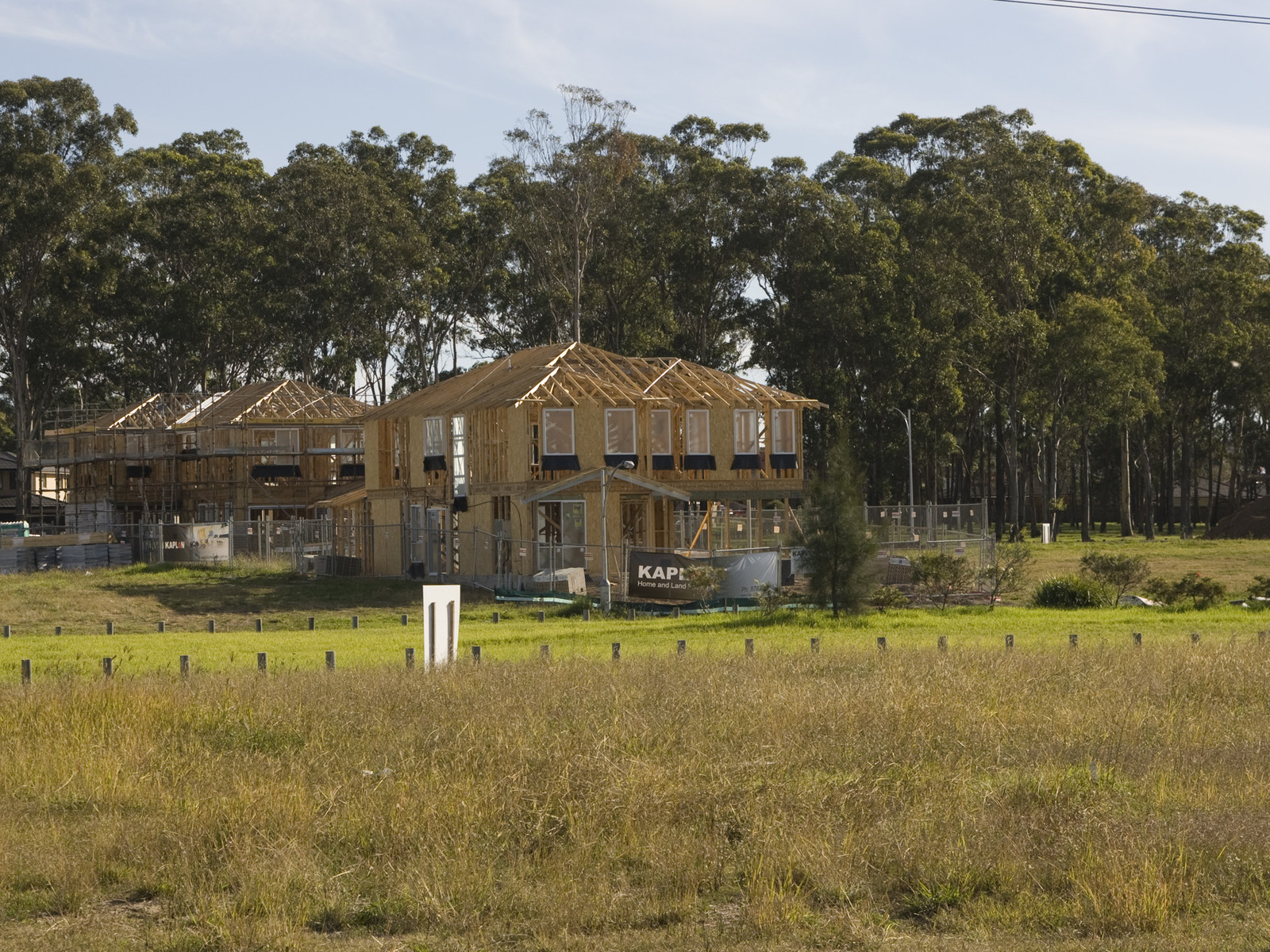
Timber wall frames and roof trusses going up on two house sites in Prestons, New South Wales. Photo: Maksym Kozlenko / Wikimedia Commons (CC BY-SA 4.0), cropped
A flagship fund had finished only 1,432 homes by mid-2026
Byrne also cited the slow start of the Commonwealth's social and affordable housing programs. "According to the Australian National Audit Office, just 1,432 homes were completed through the combined support of HAFF and the separate National Housing Accord Facility – equivalent to 3.6 per cent of the 40,000-home target under HAFF."
That 40,000 target is a combined one: 30,000 homes under the Housing Australia Future Fund by 30 June 2029, and 10,000 under the National Housing Accord Facility. The ANAO, in an audit published on 21 July, recorded the 1,432 completions as of April or May 2026 (the snapshot says May; the body of the report says April). Of those, 762 were built by housing providers and 670 were newly built homes bought from private developers.
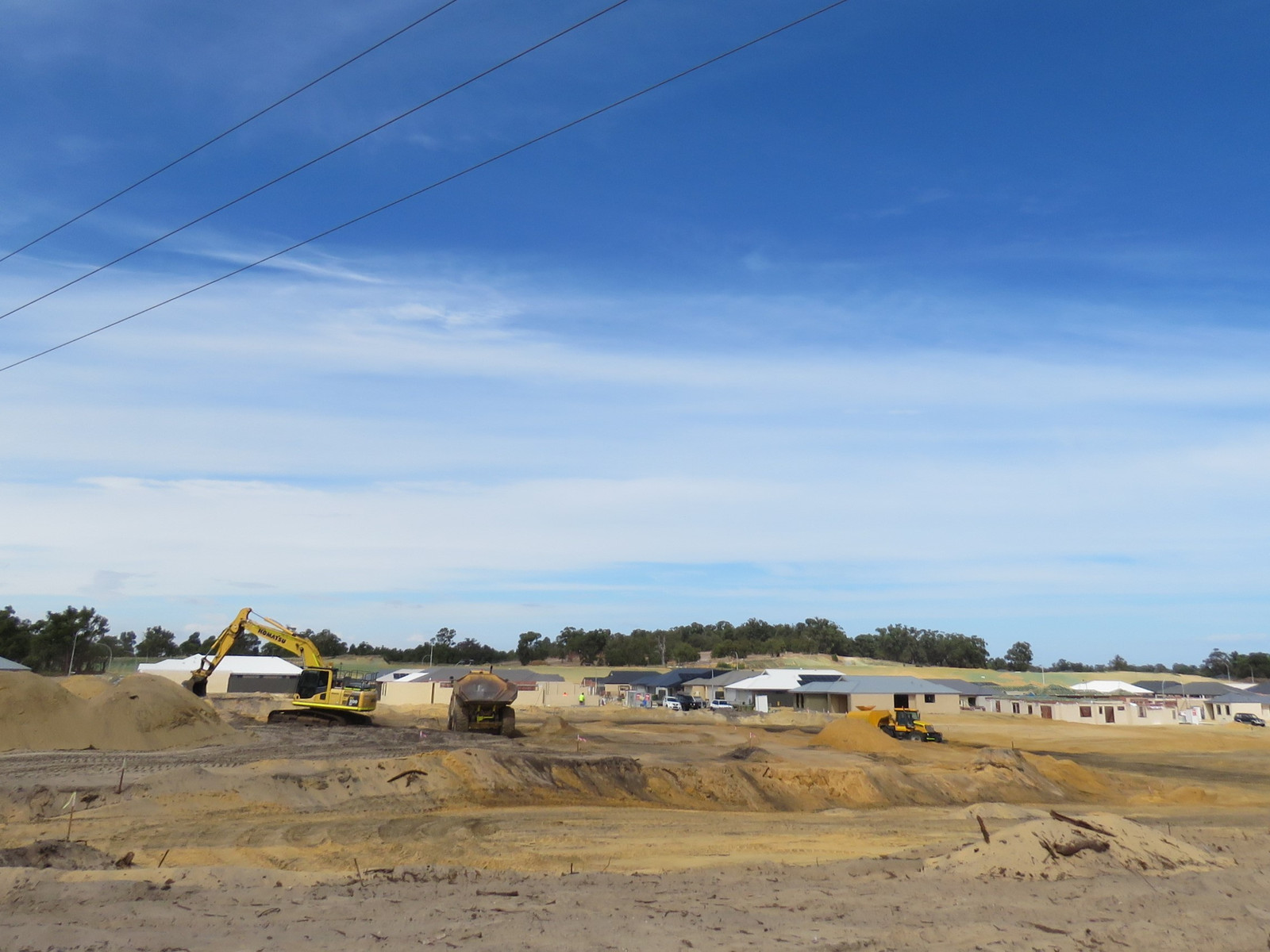
Civil works and new houses taking shape at a housing estate in Lakelands, south of Perth. Photo: Calistemon / Wikimedia Commons (CC BY-SA 4.0), cropped
What that means if you are building a house
Master Builders told the hearing the barriers include a 21.5 per cent fall in construction productivity over the past decade, a 53 per cent rise in home building costs since the pandemic, and shortages of trades. Its September-quarter report put the increase in the cost of building a house, compared with just before the pandemic, at 51.6 per cent, and said 202,000 new homes were started in 2025–26, the strongest result in four years. By August, a deficit of about 91,400 approved homes had already built up.